.avif)


Foundation
We're proudly based within the Geneva Graduate Institute, combining its resources and donor funding to address key trade policy challenges.

Published Date
March 7, 2024
Read Time
0
min read
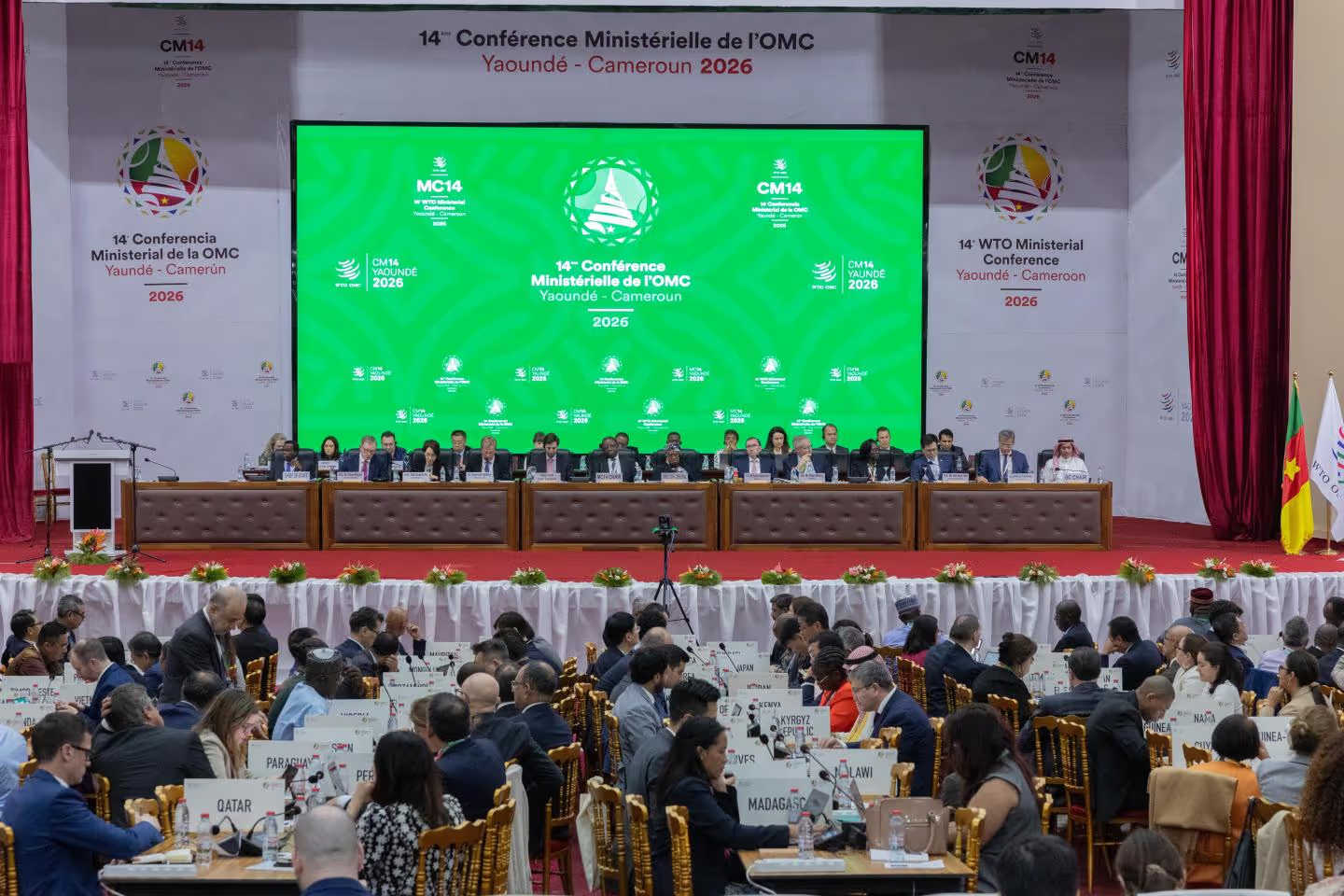
Hopes for outcomes from a WTO 13th Ministerial Conference occurring against the backdrop of significant tensions in multilateral trade were low.
Observers correctly cautioned expectations management with the US clearly unwilling to spend political capital to overcome impasses and India spoiling for a fight on virtually every issue up for negotiation. Upcoming elections in both, and elsewhere, did little to encourage the expenditure of political capital on flexibility or compromise for the sake of delivering wins for multilateralism.
The Conference outcomes disappointed but did not surprise many of those who were watching most closely. For more casual observers however, it likely did just enough to allow the WTO and the multilateral trading system to once again retreat into being objectively significant but rarely thought of.
Things did not quite fall apart, but how much longer can the centre hold?
The business community welcomed an extension for two years of a moratorium on border taxes charged on electronically delivered goods and services.
The Conference was not so obviously and manifestly a failure as to imperil the general stability of the rules-based trading order.
Disappointment as attempts to expand the agreement on fisheries subsidies fell over at the last hurdle, as did efforts to reflect environmental issues more fully in the WTO’s mandate, processes, and work streams.
The joy of welcoming Comoros and Timor-Leste into the fold, mixed with disappointment as a somewhat quixotic attempt to negotiate back into existence its highest arbitration function (the Appellate Body), and agree some procedural reforms to dispute settlement, led to little more than a decision to ‘keep working on this’..
Despite engaging on the detail, the US still appears disinclined to restore a binding form of dispute settlement that can rule its trade policies to be in breach, at least not before 2024 electoral cycle runs its course.
Can look to the entry into force of the Agreement on Domestic Regulation in Services and the official conclusion of the Investment Facilitation for Development Agreements, as well as environmental initiatives like the Dialogue on Plastics Pollution and Environmentally Sustainable Plastics Trade.
These processes included less than the full WTO Membership and have their detractors, but collectively demonstrated an appetite for progress, and even some liberalization, among significant subsets of the world’s economies.
Finally, those seeking a single takeaway from all this could be forgiven for despondency, but in truth very little has changed.
There is important work to be done in Geneva, especially in the oft-neglected regular work of managing trade policy friction at a micro-level. This will only become more potentially significant as environmental, industrial and geostrategic concerns drive more policies, and more friction.
However, the primary tool for preventing disruptive, unpredictable trade policies is to make a strong case against them in capitals. Winning that argument in capital opens the door to pushing for a reinvestment in a system which will robustly discipline such behaviours across the entire global economy.
With even some of its architects now flirting with protectionism, industrial policy and trade diversion, expecting the argument to be won at the WTO and imposed on capitals rather than the other way around is a more distant dream than ever.
Throughout the week, Jan Walter (Akin) and Joan Okitoi-Heisig (GTP), provided updates from the ground, you can follow their journey on our MC13 Updates YouTube Playlist.
Dmitry Grozoubinski and the Geneva Trade Platform partner widely to support the trade policy conversation in Geneva, and beyond. They can be reached at: info@genevatradeplatform.org. Jan Walter and Akin work with a range of clients to help them better navigate the Geneva international policy landscape, you can find Jan on LinkedIn and email at: JWalter@akingump.com
We will do our best to respond to any and all enquiries promptly and look forward to hearing from you.